




Mississinewa 1812 is the largest War of 1812 living history event in the United States, commemorating the Battle of Mississinewa fought here in Grant County on December 17 and 18, 1812. I attended once when my daughter needed to go for a high school project, and naturally I brought my camera along.
The event itself was not really my thing, although many people love it. What did catch my attention was the homesteading side of living history. I found myself drawn to the wool and fiber work, period cooking, food preparation, traditional tools and demonstrations of the ordinary work required to keep a household going. Those practical details made the early 1800s feel much more tangible than simply reading about them.
My visit took place at the former event grounds. Mississinewa 1812 has since moved to Ahsenionki, a private property owned by the Mississinewa Battlefield Society at 1812 East Tulip Drive in Gas City, Indiana. That move is why I came back to this older article and gave it a thorough update while preserving the photographs and impressions from the day I actually attended. The hands-on historical skills are also a natural connection to the work I do at Experimental Homesteader. In fact, I wrote about this same visit from the homesteading side in What Homestead Living Is Really Like, including the turkey processing, fiber, flax and other traditional skills that caught my attention that day.
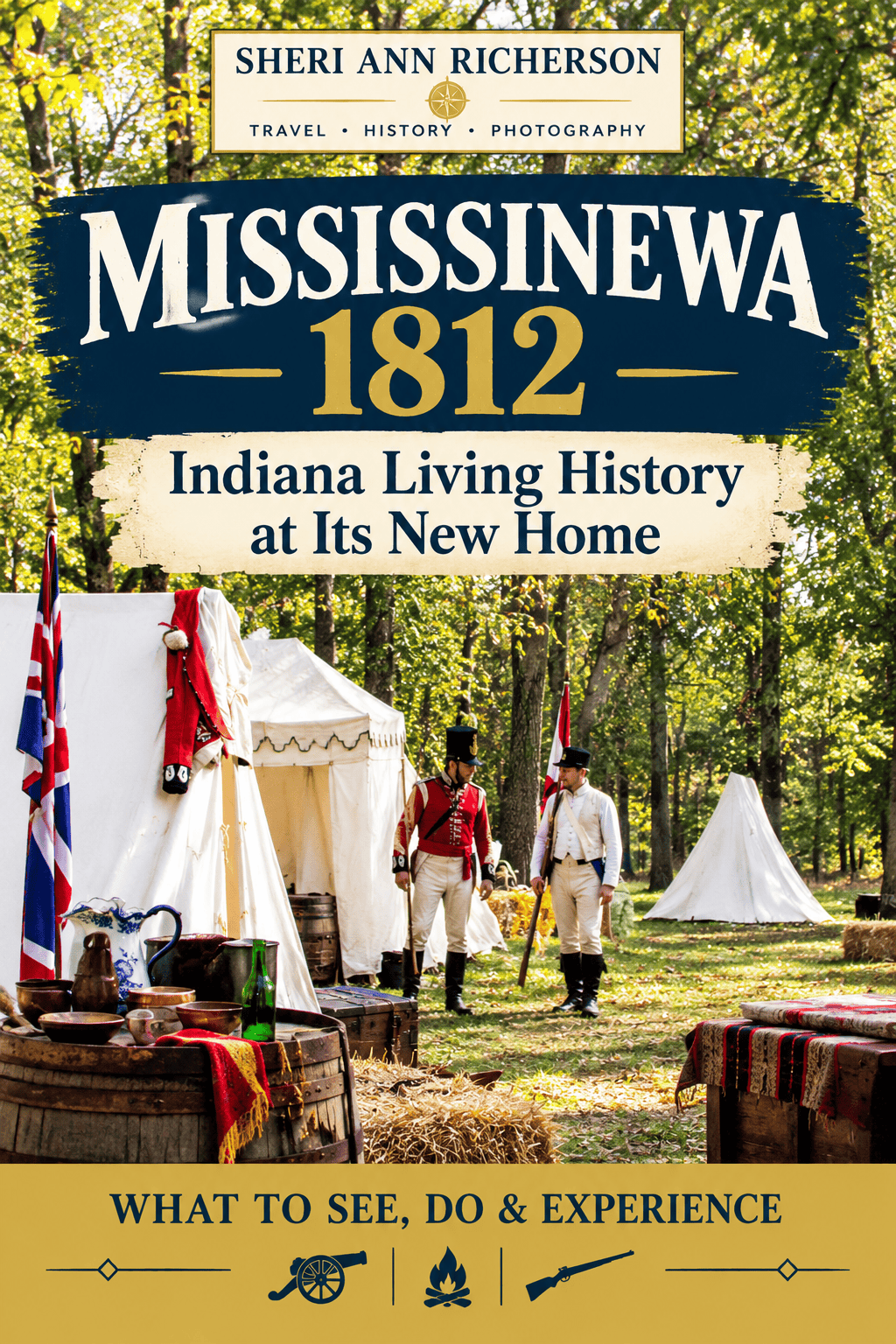
Mississinewa 1812 Has A New Home
If you attended Mississinewa 1812 years ago, as I did, the location is one of the biggest things you need to know before planning another visit. The event began in 1988 and eventually grew far beyond a small local reenactment. According to the Mississinewa Battlefield Society, attendance has topped 30,000 people in a weekend, including thousands of students. After more than 35 years at the former grounds, the organization needed more room and a location that could support the event's future rather than simply squeezing another year into the old space.
The new property is called Ahsenionki, at 1812 East Tulip Drive in Gas City. The move is bigger than changing the address for one October weekend. The Society is developing Ahsenionki with the goal of creating a living history park that can support educational programming and additional reenactment events during the year. For people who have photographs and memories from the old grounds, that also means the event they remember and the one future visitors encounter will not look exactly the same.
One practical point matters here: Ahsenionki is private property. It is closed to the public except during published events, so the address is not a year-round historic attraction where you can simply pull in and look around. Check the official Mississinewa 1812 website for current dates, tickets, schedules, rules and visitor information before making the trip.

Why Living History Is Worth Experiencing
I can read a date in a history book and understand what happened, but that is different from standing in a camp and noticing all the little things people had to do just to get through an ordinary day. A cooking fire has to be tended. Food has to be prepared without the appliances we take for granted. Wool does not magically become cloth. Tools, clothing, shelter and household necessities all required materials, knowledge and time. Those are the details that make living history useful to me.
At Mississinewa 1812, the military history is only part of what is happening around you. The official event includes American and British military encampments, a Native American village, wilderness camps, traditional artisans, period merchants, music, storytelling and demonstrations. During my visit I was far more interested in wandering through those everyday-life areas than I was in simply watching a battle reenactment. Someone who loves military history may come away with an entirely different favorite part, and that is one of the strengths of an event this large.
There is also something different about encountering this history here in Grant County. The Battle of Mississinewa was not a distant event attached to a place I would never see. It happened here. Seeing people interpret that period locally gives the dates, conflicts and daily realities a physical setting, while also making it important to remember that the history involved real communities and real consequences.
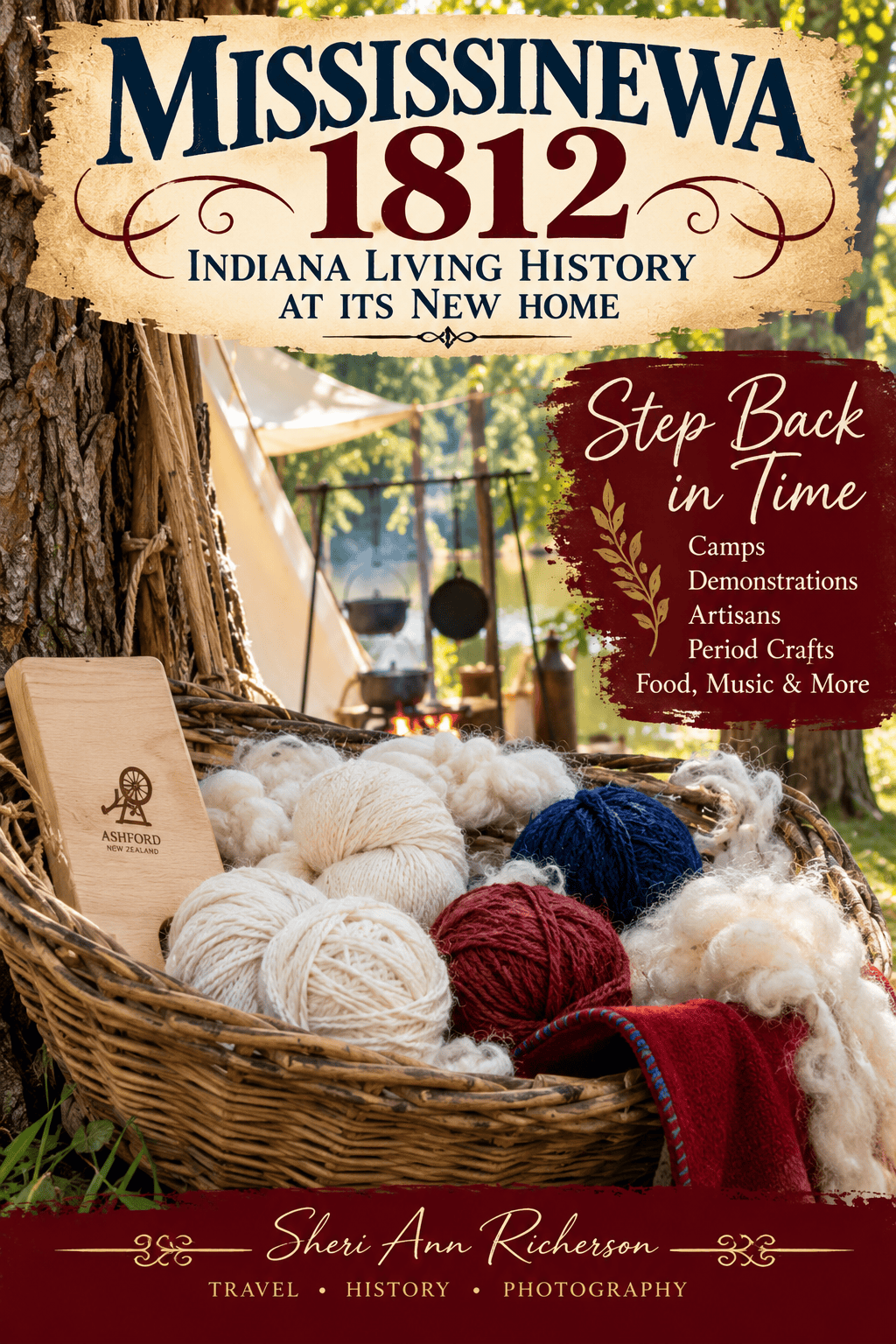
What To Expect At Mississinewa 1812
There is a lot going on beyond the scheduled battle reenactments, and that is where I found the parts that interested me most. Wandering through the camps gives you a chance to notice how people cooked, worked, made things and handled ordinary daily tasks. Depending on the year's participants, you may see crafts such as blacksmithing, pottery, weaving, tinsmithing or silversmithing, along with period merchants, food, music and storytelling. For me, those quieter details of everyday life were far more interesting than simply watching the military action.
The best advice I can give is not to rush from one scheduled attraction to another. Look inside the camps. Notice what is hanging over the fire, what people are using for dishes and cookware, what materials are being worked and how little of daily life could be accomplished by pushing a button. If a living historian is demonstrating something that interests you, ask questions. How was it made? What was the tool used for? What would a family have eaten? How long did the task take? That is where an event like this can become much more than rows of tents and people in period clothing.
It is equally important not to lose the real history underneath the reenactment. The Battle of Mississinewa was part of a violent and complicated period involving the United States, Native nations and the War of 1812. The people represented by the camps were not characters invented for an October festival. Keeping that in mind adds needed context to the demonstrations, military interpretation and stories visitors encounter throughout the event.
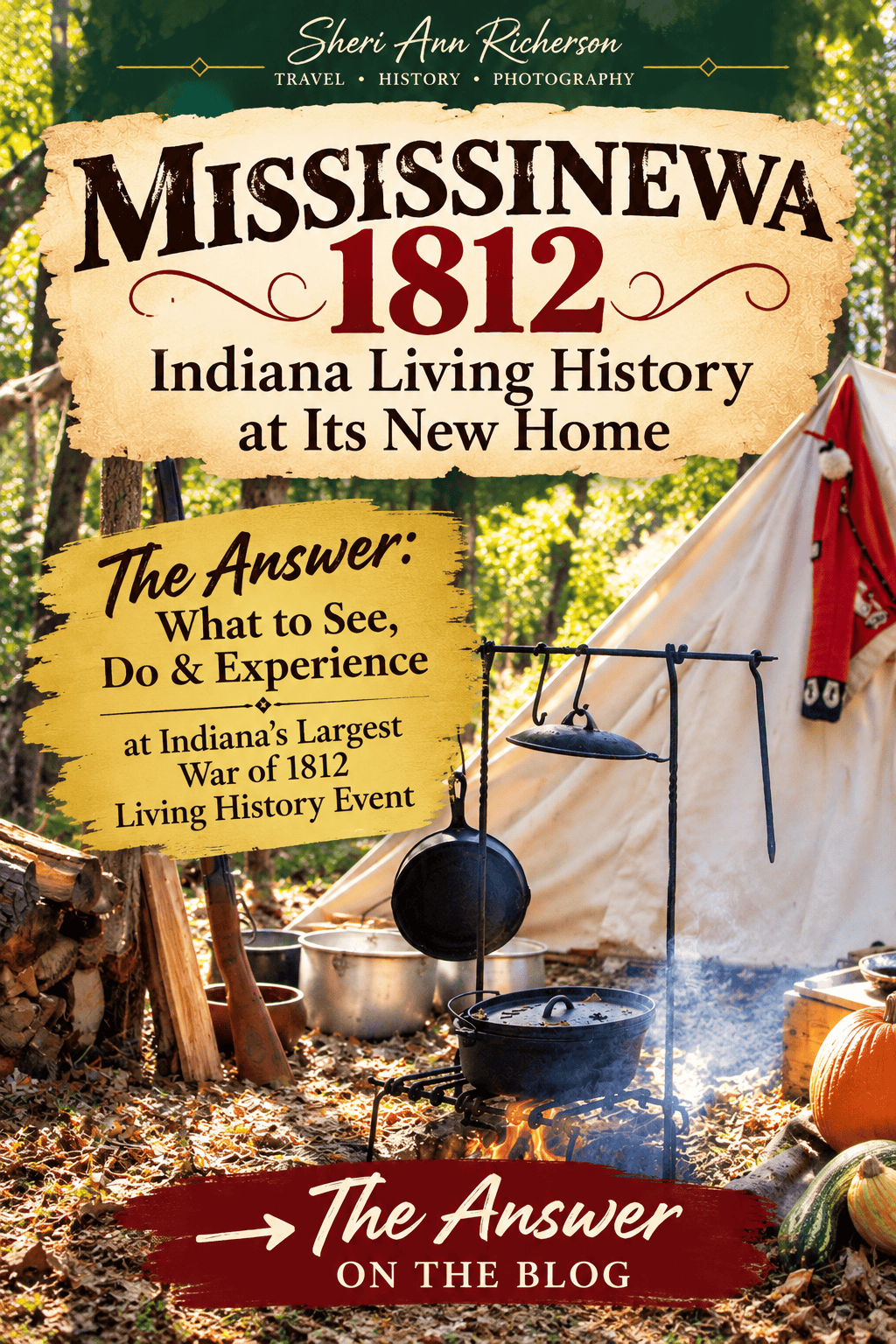
Be Prepared When Attending Mississinewa 1812
October in Indiana does not automatically mean cool sweater weather. The day I attended Mississinewa 1812 was hot, and because the event covers a large area, I remember walking what seemed like forever. I would plan for the weather you actually have that day rather than the weather you think October ought to bring. Comfortable walking shoes matter, and so does having some way to protect yourself from the sun or rain. I saw paper parasols for sale when I attended, but a compact umbrella is an easy thing to tuck into a bag.
The size of the event is worth keeping in mind too. There is much more to see than a single reenactment area, and the crowds were substantial during my visit. If your interests lean toward old-fashioned skills the way mine do, give yourself time to look beyond the military side. The wool and fiber work fascinated me, and I also watched food-related demonstrations, including a turkey being processed. Those glimpses of ordinary household work were the parts that made me stop and pay attention because they showed the practical side of life in a way a display case simply cannot.
I would also bring money for food, drinks and anything you may want from the vendors. When I attended, outside food and drinks were not allowed past the gate, but rules can change, especially now that the event has moved, so verify the current policy on the official site before you go. Vendors offered period-inspired goods and materials, including things such as silk thread and historical clothing. If you expect to shop heavily, a small rolling cart can save you from carrying purchases all day, although you will still need to maneuver it through crowds and vendor areas.
And bring the camera. Even though Mississinewa 1812 was not an event I personally fell in love with, I am glad I photographed what interested me. Years later, those images are what let me look back at the camp kitchens, tools, textiles and other details that I might otherwise have forgotten.
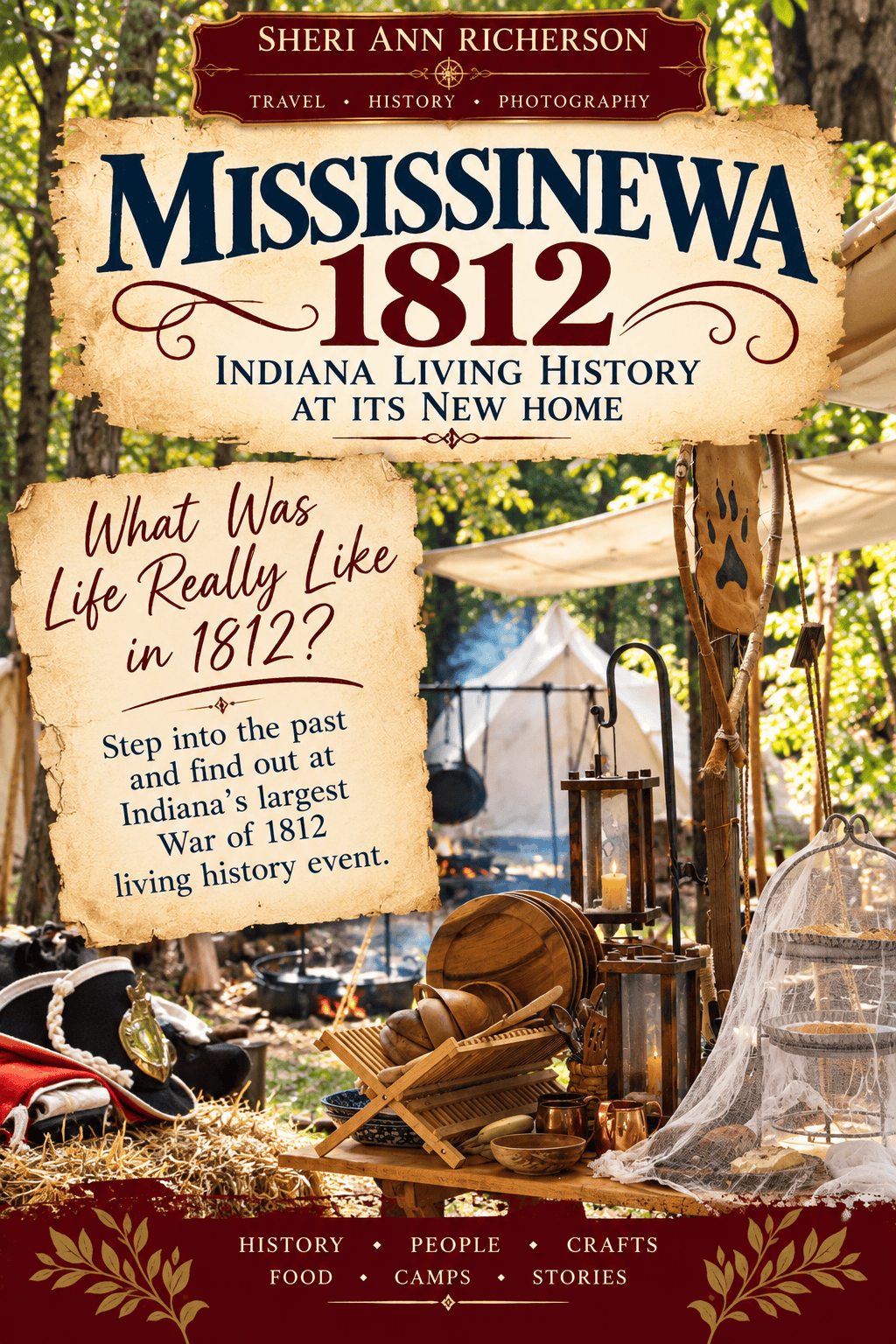
Planning A Future Visit To Mississinewa 1812
The 2026 Mississinewa 1812 event took place October 2 through 4, so this year's weekend has now concluded. If you are finding this article while planning for a future October, check the official event website before making travel plans. Dates, schedules, ticket information, rules and visitor logistics can change from year to year, especially while the new Ahsenionki property continues to develop.
Because this is a new home for the event, I would pay particular attention to current parking, entrance and visitor instructions rather than relying on anything you remember from the former location. Ahsenionki is still private property outside published events, and logistics can change as the site continues to develop.
If Indiana history interests you, you may also enjoy my firsthand visit to the Tippecanoe Battlefield. The Battle of Tippecanoe in 1811 is part of the larger sequence of events leading into the War of 1812, making the two sites especially interesting to explore together. For a very different look at Indiana history, I also photographed and explored the historic Seiberling Mansion in Kokomo, where the architecture and preserved interiors tell the story of Indiana's gas-boom era.
The images in this article were created from photographs I took during my visit at the former location. They preserve the parts of the experience that stayed with me most, especially the camps, wool and fiber work, period cooking and other practical details of daily life. The new Ahsenionki site is a different setting, so use these images as a record of my experience rather than a preview of the current grounds.




Leave a Reply